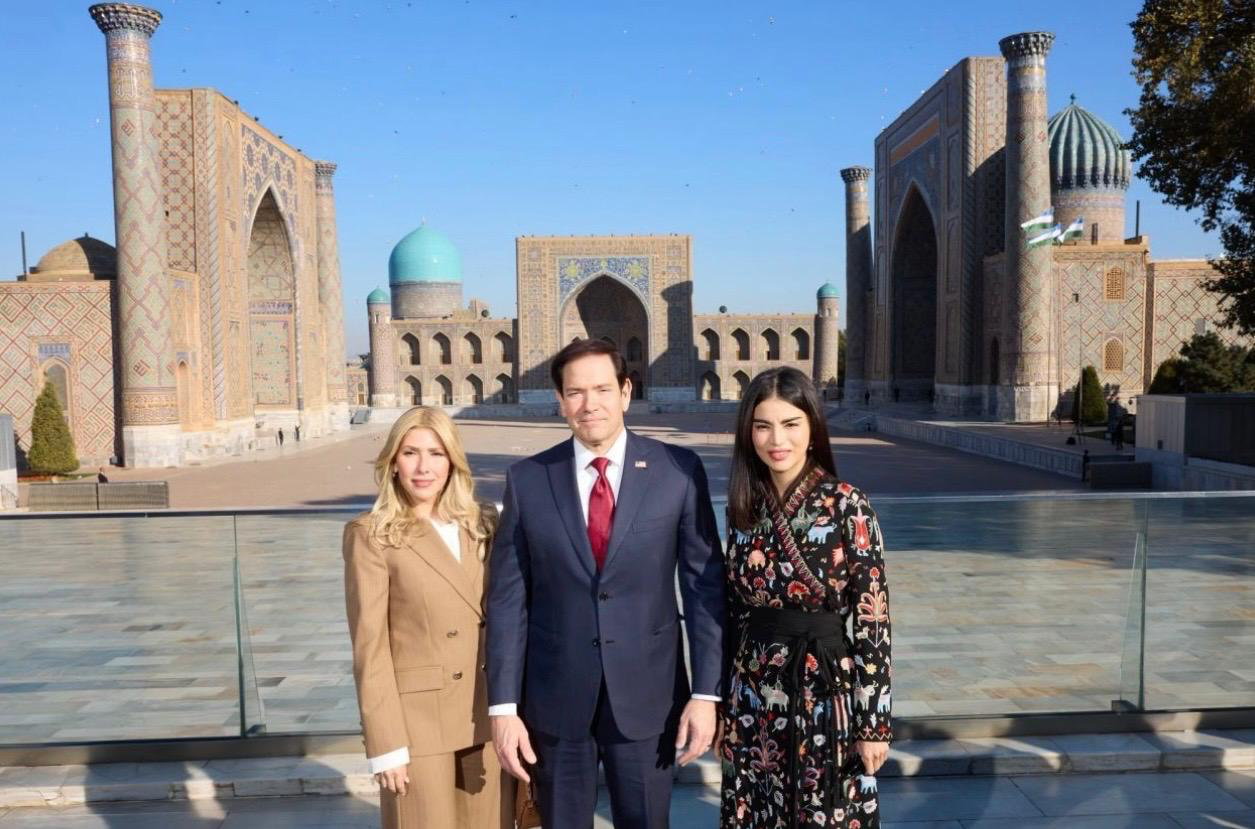
Secretary of State Marco Rubio’s visit to Samarkand highlights Central Asia’s growing importance in U.S. foreign policy. While it is too early to describe the visit as a strategic turning point, it raises an important question: what could deeper American engagement mean for Afghanistan and regional peace?
Several factors may explain Washington’s increased attention. Russia’s prolonged war in Ukraine has absorbed considerable resources and diplomatic attention, potentially creating greater space for Central Asian states to diversify their international partnerships. China’s expanding economic influence may provide another incentive for American engagement. Washington may seek to strengthen its position in a region where Beijing has developed substantial commercial and infrastructure interests. These considerations suggest a competitive dimension, although they do not establish that containing China is the visit’s principal purpose.
Central Asian states also have their own priorities. They seek investment, access to markets and greater flexibility in foreign policy. Their engagement with Washington should therefore be understood as part of efforts to broaden their partnerships, rather than as an automatic alignment against Russia or China. Meanwhile, the costs and complexities of U.S. involvement in the Middle East may encourage greater attention to opportunities elsewhere, without necessarily indicating a strategic withdrawal from that region.
For Afghanistan, this engagement raises questions about its possible implications for regional diplomacy and peace. The U.S. withdrawal and the Taliban’s return to power in 2021 exposed the limitations of previous international approaches. However, withdrawal does not necessarily mean that Afghanistan has disappeared from American strategic calculations. Closer relations with Central Asian states could offer additional channels for diplomatic engagement, although the visit alone does not demonstrate the existence of a new U.S. political initiative on Afghanistan.
Any contribution to conflict resolution would depend on how these relationships develop. Economic connectivity could strengthen shared interests in stability, but commercial cooperation alone cannot resolve Afghanistan’s political challenges. A sustainable political settlement requires dialogue between the Taliban and other political and social constituencies, meaningful participation by women, and protection of fundamental rights.
Cooperation among the United States, China, Russia and relevant regional states could help create conditions for such a process. Its purpose should be to support inclusive negotiations and peaceful political accommodation, with Afghanistan’s future determined through a domestic process.
The significance of this engagement will therefore become clearer over time. For Afghanistan and its neighbours, the key question is whether growing strategic interest can support cooperation on conflict resolution, rather than add another layer of geopolitical competition.