
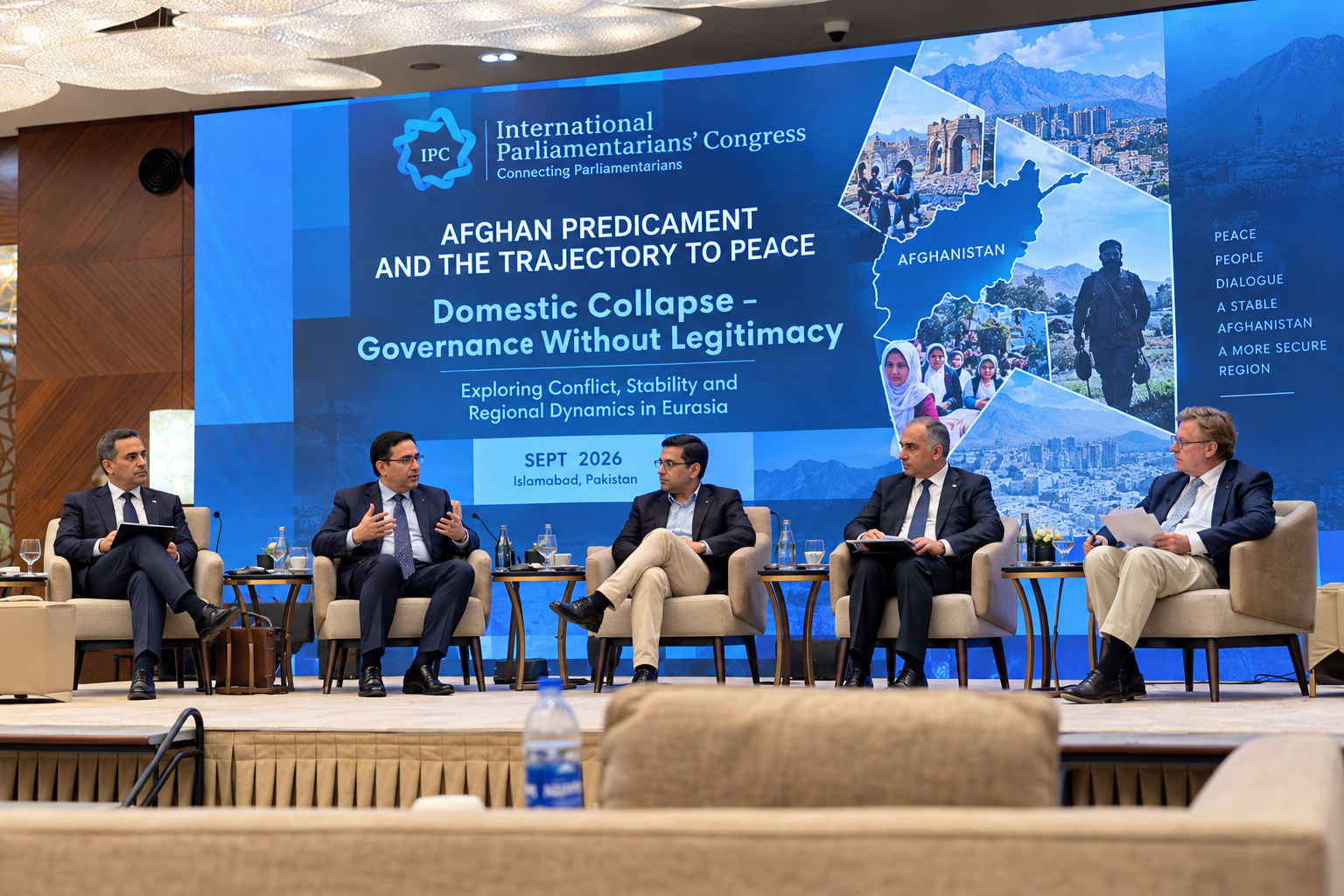
Recent discussions in Islamabad on Afghanistan have once again highlighted regional concerns over the country’s political future, security, and relations with the international community. While regional countries have different interests and approaches toward Afghanistan, they also share important concerns, including regional stability, cross-border security, economic connectivity, migration, and the threat of violent extremism. These shared interests provide an important basis for greater regional dialogue and cooperation.
Afghanistan’s challenges are too complex to be addressed by any single neighbouring or regional country. Different and sometimes competing regional approaches have historically complicated efforts to achieve lasting stability. A more constructive path would require Afghanistan’s neighbours and other influential regional actors to identify areas of common interest and support peaceful dialogue among Afghan political and societal actors. Such engagement could help create space for broader political participation, more inclusive governance, and peaceful approaches to addressing political differences.
Regional cooperation, however, should not replace Afghan ownership or the role of the United Nations and the wider international community. Rather, these efforts should complement one another. A more coordinated regional approach, connected with existing international diplomatic processes, could help build confidence among regional states while providing space for Afghans to address the political, economic, and social challenges facing their country.
Ultimately, sustainable peace in Afghanistan is closely connected to stability across the wider region. No single country can provide a lasting solution to Afghanistan’s challenges. The recent Islamabad discussions can therefore be viewed as an opportunity to encourage sustained regional dialogue, reduce competing approaches, and strengthen cooperation around shared interests. A coordinated effort grounded in Afghan ownership and supported by regional and international engagement could contribute to peace, more inclusive governance, regional stability, and Afghanistan’s gradual reintegration into the international community.