Ottawa, Canada — October 2026
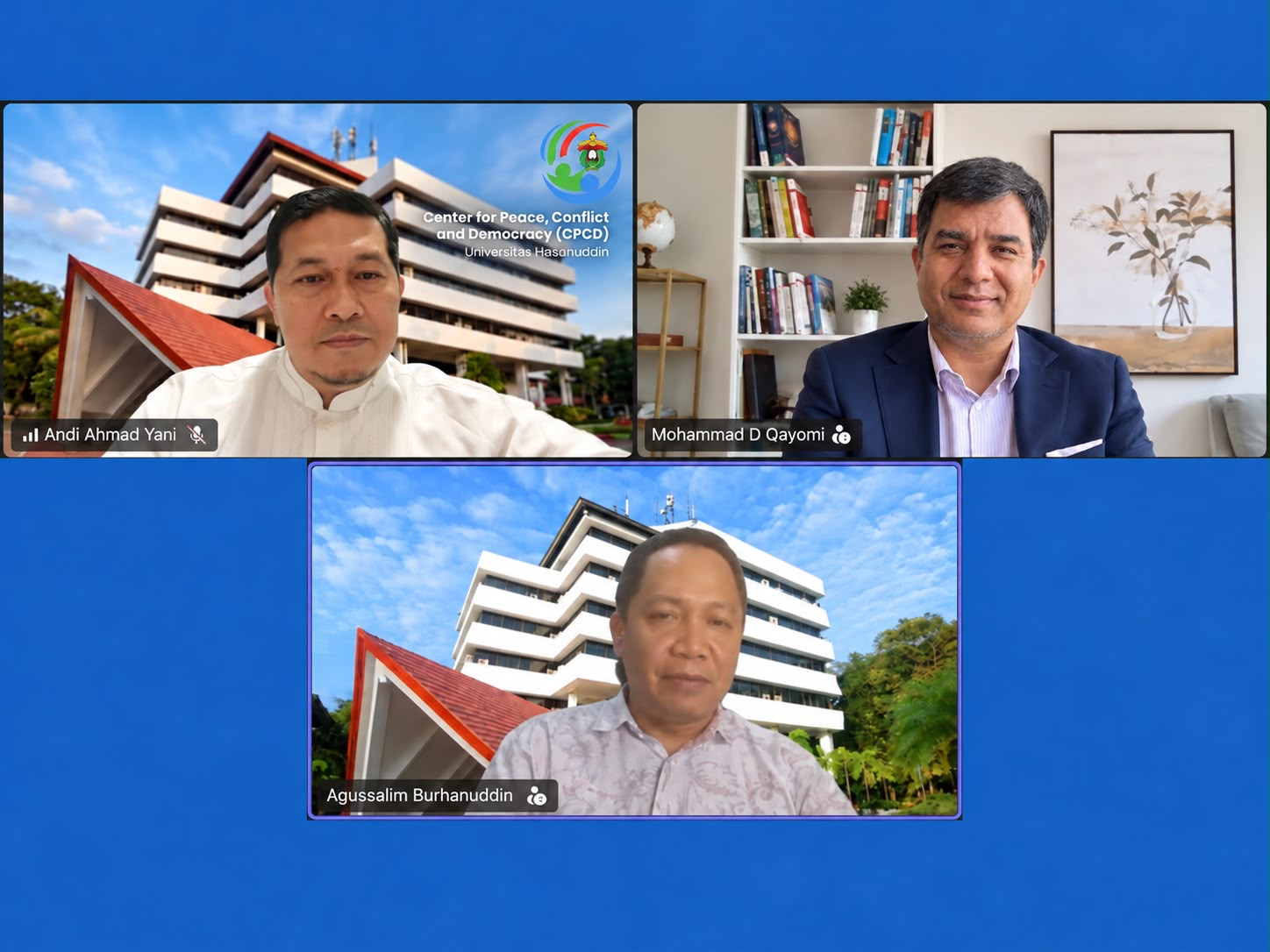
The Center for Afghanistan and Regional Peace Studies (CARPS), based in Canada, held a productive virtual meeting with the Center for Peace, Conflict and Democracy (CPCD) at Hasanuddin University, Indonesia, to explore opportunities for academic cooperation, joint research, and international dialogue on peace and conflict resolution.
The meeting brought together Mohammad Dawood Qayomi, Director of CARPS; Andi Ahmad Yani, Deputy Director of CPCD; and Dr. Agussalim Burhanuddin, a researcher and lecturer at Hasanuddin University.
CARPS welcomed the opportunity to engage with CPCD, a specialised research centre affiliated with Hasanuddin University, one of Indonesia’s well-established public universities. The meeting marked a valuable step towards strengthening academic partnerships and developing research networks connecting Canada, Afghanistan, Central Asia, and Indonesia.
An important outcome of the discussions was the expansion of institutional ties. Andi Ahmad Yani joined the CARPS Advisory Council, while Dr. Agussalim Burhanuddin joined CARPS as a Senior Research Fellow. These developments represent concrete steps towards sustained academic and research cooperation.
Qayomi also welcomed and accepted CPCD’s invitation to collaborate as a Visiting Researcher, opening further opportunities for joint research, academic exchange, and scholarly engagement.
Both sides expressed interest in organising an academic lecture on “Challenges to Peace in Afghanistan” at Hasanuddin University during the coming semester. Qayomi expressed his readiness to contribute to the proposed programme in cooperation with CPCD and the university’s Department of International Relations, subject to further coordination.
The discussions also explored the possibility of organising an international workshop in Canada, potentially focusing on “Islam and Democracy.” Qayomi expressed his commitment to exploring this initiative through consultations with the University of Toronto, Laurentian University, Saint Paul University, and other relevant Canadian institutions. Any future programme would depend on mutual interest, institutional agreement, and scheduling arrangements.
CARPS considers the meeting a positive and meaningful step in expanding its international academic network and looks forward to deepening cooperation with CPCD in research, education, academic exchange, and regional peacebuilding initiatives.