Introduction
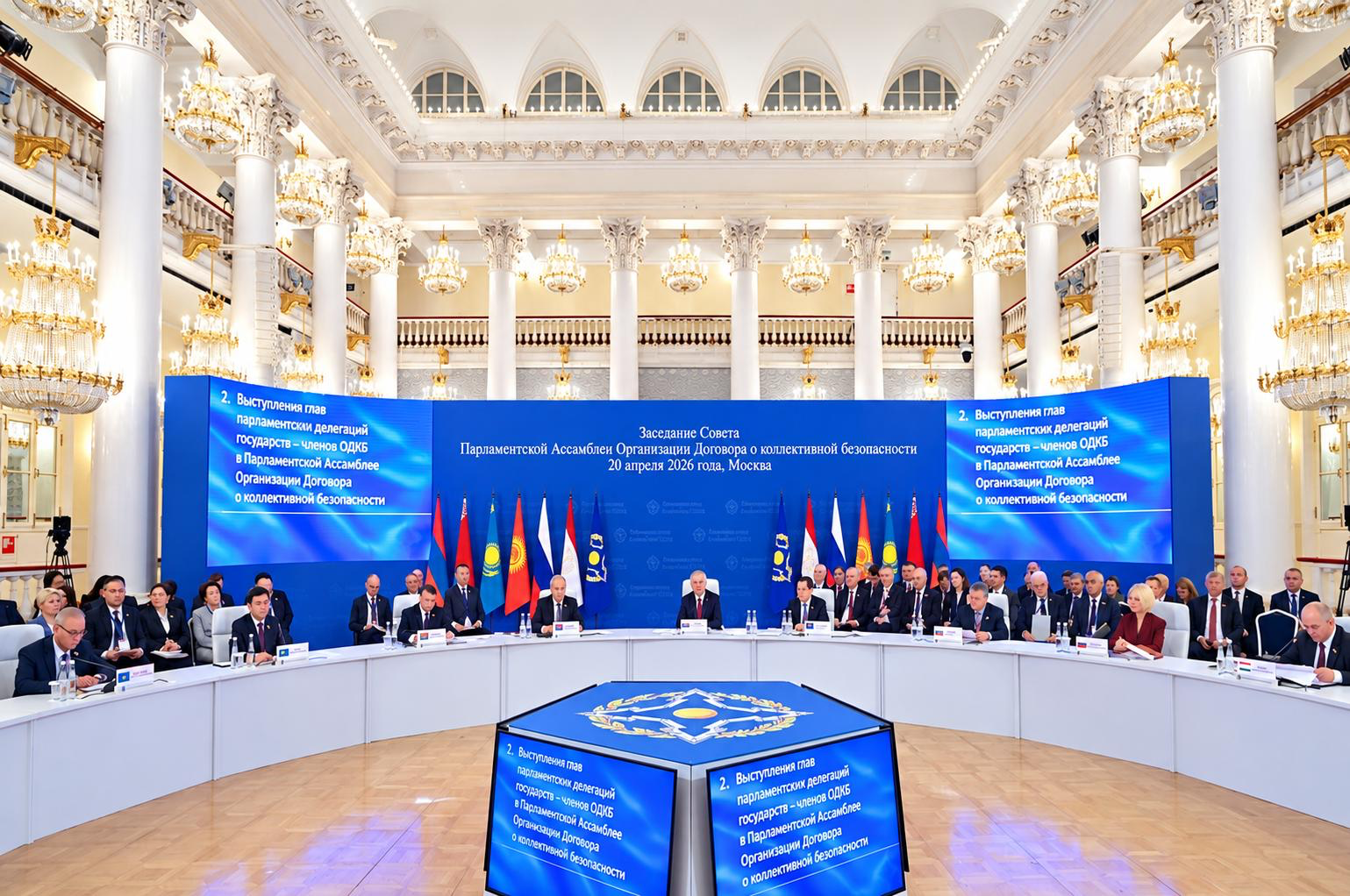
The security conference convened in Moscow on 16 October 2026 brought together the Collective Security Treaty Organization (CSTO), the Commonwealth of Independent States (CIS), and the Shanghai Cooperation Organisation (SCO). Its official conference programme identifies security challenges in Central Asia, risks associated with Afghanistan, and wider dimensions of regional stability, including energy, food, water and information security. The meeting offers an opportunity to reconsider not only how regional states respond to threats arising from Afghanistan, but also what kind of stability their policies seek to support.
The conference followed the eighth Moscow Format consultations on Afghanistan, held on 5 October 2026. Those talks ended without a joint statement after Afghan and Pakistani representatives disagreed over wording concerning terrorism, according to the reported disagreement over the final communiqué. The dispute illustrates that even neighbouring governments do not necessarily share the same assessment of regional threats.
Since the Taliban returned to power in August 2021, neighbouring states have pursued varying degrees of security, diplomatic and economic engagement with Kabul. Their concerns include armed extremist groups, border management, trade and regional connectivity. Such cooperation can serve legitimate and immediate interests. Yet a central question remains: can regional security become durable if Afghanistan’s internal political conflict is left unresolved?
This commentary argues that security engagement is necessary but insufficient. A sustainable regional approach must connect counterterrorism and economic cooperation with political reconciliation, inclusive institutions and conflict transformation. The objective is neither to isolate Afghanistan nor to endorse its current governing arrangements. It is to identify conditions that enable different political and social groups in Afghanistan to resolve their differences through dialogue and reach a shared understanding without renewed violence.
Political Conflict and Legitimacy
Afghanistan’s conflict is more complex than a confrontation between the authorities and terrorist organisations. Decades of armed struggle reflect contested political authority, external intervention, institutional weaknesses, social inequalities and repeated disputes over representation. Ethnic diversity matters, but it does not explain the conflict by itself. Competition among political elites, centralised decision-making, ideology and external support have also shaped successive crises.
The Taliban’s return to power in 2021 brought the previous republic to an end and reshaped Afghanistan’s political and security landscape. It also reduced large-scale nationwide fighting. This improvement should be acknowledged: an UNAMA assessment in August 2026 noted the benefits of greater day-to-day security. Nonetheless, controlling territory and resolving a conflict politically are two different things.
Political parties and opposition movements remain outside the governing framework. Some groups continue armed resistance, although current reporting does not establish that they can overturn the Taliban’s nationwide control. The more important question is whether meaningful and peaceful channels exist for citizens and political actors to express grievances, contest decisions and influence public authority.
Political legitimacy has several dimensions. Effective control over territory is one; public acceptance, institutional accountability and opportunities for participation are others. International recognition is a further, distinct question and should not be treated as a simple measure of domestic consent. Where credible political mechanisms are absent, disagreements may persist even when open warfare declines.
The United Nations and World Bank study Pathways for Peace explains how exclusion from power, justice, security and resources can contribute to violent conflict. Applied to Afghanistan, this does not establish that renewed war is inevitable. It does suggest that a durable settlement should address how public authority is exercised, how institutions are held accountable and how communities can participate without coercion.
From Negative to Positive Peace
Peace scholar Johan Galtung distinguished negative peace, understood principally as the absence of direct violence, from positive peace, which also addresses the conditions that sustain injustice and exclusion. Galtung’s foundational research offers a useful way to interpret Afghanistan’s current transition from widespread warfare to a more consolidated but politically contested order.
A decline in battlefield violence can make daily life safer. It does not automatically resolve disputes over political representation, civic freedoms or access to education and employment. Structural violence describes institutional arrangements that systematically constrain people’s opportunities. Cultural violence concerns beliefs and narratives used to justify forms of exclusion or harm. Neither concept should be used as a substitute for careful evidence about specific Afghan institutions or practices.
John Paul Lederach’s approach to conflict transformation complements this distinction. Conflict transformation looks beyond a ceasefire or military balance to the relationships, institutions and patterns of behaviour through which disputes can be handled peacefully. In this perspective, peacebuilding is not simply the removal of armed threats; it is also the creation of mechanisms that reduce incentives to use force.
This does not mean that every centralised government is unstable or that participation alone guarantees peace. It means that security achieved primarily through coercion may face challenges when political grievances lack peaceful outlets. A more durable strategy would combine protection from violence with accountable institutions, social trust and an agreed method for addressing competing demands.
Comparative Peacebuilding Lessons
Other divided societies offer lessons, although none provides a ready-made model for Afghanistan. Northern Ireland and North Macedonia are especially useful because their peace processes addressed questions of representation through negotiated institutional change rather than through military measures alone.
In Northern Ireland, the 1998 Belfast Agreement, also known as the Good Friday Agreement, established arrangements based on consent, power-sharing and cooperation among competing political traditions. Its institutions draw on elements of consociational democracy, including participation by opposing parties in executive authority. The agreement did not erase disagreement over identity or sovereignty, and institutional suspensions have continued. It did, however, create rules through which political rivals could pursue their objectives without sustained large-scale armed confrontation.
In North Macedonia, the 2001 Ohrid Framework Agreement followed an armed confrontation involving state forces and ethnic Albanian insurgents. It supported decentralisation, improved language rights and more equitable representation within public institutions. The country did not become fully decentralised, and tensions have not disappeared. Nevertheless, negotiated reforms helped contain the conflict and widen participation in governance.
Three lessons are relevant to Afghanistan. First, groups do not have to agree on every political question before they can agree on peaceful rules for managing disagreement. Second, inclusion must be institutional rather than a collection of symbolic appointments. Third, reconciliation is a continuing process: implementation, public confidence and safeguards against renewed exclusion matter as much as an initial agreement.
These are comparative insights, not a proposal to transplant consociationalism or any fixed constitutional design. Afghanistan’s institutions must emerge from its own social and political realities through a credible Afghan-led dialogue.
Rights, Women and Human Security
A narrow conception of security places borders and armed threats at the centre of policy. Human security adds the safety, dignity and opportunities of individuals and communities. This distinction matters in Afghanistan, where political restrictions reach far beyond the battlefield.
Women and girls face severe restrictions on secondary and higher education, employment and public participation. According to UNESCO’s August 2026 assessment, about 2.4 million girls were excluded from secondary education. Women have also been barred from universities and face serious limits on professional and public life. These restrictions have social, economic and political consequences.
Excluding approximately half the population from key institutions reduces the pool of educated professionals, weakens economic recovery and limits the legitimacy and responsiveness of public decision-making. Women must be regarded not only as people affected by insecurity but also as participants in negotiation, reconstruction and peacebuilding. Research on inclusive peace processes identifies meaningful participation as one factor that can improve the quality and implementation of peace agreements; it is not, by itself, a guarantee of success.
Human rights should therefore not be treated as a separate issue to be addressed only after the security situation improves. The ability of people to participate, obtain education and seek remedies for grievances is part of what makes peace socially sustainable.
Afghanistan’s Post-2001 Lesson
Afghanistan’s own history also warns against assuming that a defeated movement no longer needs a political pathway. The 2001 Bonn process created a framework for rebuilding state institutions, but it did not include the Taliban as a negotiating party. The Afghanistan Analysts Network has documented efforts by some Taliban figures to surrender or seek accommodation after their defeat. Its analysis of the 2001 Bonn process also cautions against describing that conference as a comprehensive peace settlement among the actual belligerents.
These accounts do not prove that a viable nationwide agreement with the Taliban was readily available in 2001–2004. Nor was exclusion the sole cause of the later insurgency. Abuses, corruption, local grievances, sanctuaries across borders, regional interference and military operations all contributed. Nevertheless, early opportunities for political accommodation were not developed into a durable reconciliation process.
The Taliban subsequently rebuilt an insurgency and returned to power two decades later. This history warns of the potential for renewed conflict when political grievances remain unresolved. Without meaningful dialogue between the Taliban and other political and social groups, opposition could persist and develop into a wider conflict that becomes increasingly difficult to contain. Lasting peace therefore requires a political process through which the different parties can address their differences and reach an inclusive settlement.
For such a process to succeed, the Taliban should enable meaningful political participation by peaceful opponents, women, civil society and diverse communities. Opposition actors, in turn, should commit to non-violent political competition and fundamental rights. Reconciliation must rest on mutual accommodation, rather than the surrender of one side or the restoration of a predetermined political order.
A Regional Peacebuilding Approach
Russia, China, Iran, Pakistan and the Central Asian states have substantial interests in preventing transnational militancy and supporting trade and connectivity. Their engagement with Kabul is a natural expression of these interests. The broader question is how this engagement can also help create conditions for inclusive dialogue and a lasting political settlement in Afghanistan.
A regional peacebuilding framework would treat Afghanistan’s internal conflict and regional security as related, but distinct, policy challenges. Regional governments could agree on basic principles: respect for Afghan sovereignty, rejection of the use of Afghan territory for attacks on other states, support for non-violent political dialogue, meaningful social participation and protection of fundamental rights.
They could then support discreet consultations and confidence-building measures involving the Taliban and a broad range of Afghan political and civic actors. Dialogue should include representatives of women and communities whose views are seldom heard in official forums. The agenda should consider participation, institutional accountability, safeguards for rights and peaceful management of disputes, without prescribing a particular constitutional formula in advance.
The United Nations could provide mediation expertise and procedural support with the agreement of the parties involved. Regional organisations could coordinate diplomatic incentives, technical assistance and support for implementation. Such a process should be led by the people of Afghanistan, with external actors supporting their efforts to shape the country’s political future.
Important constraints remain. Regional states have competing priorities, as the latest Moscow Format disagreement demonstrated. The Taliban may have limited incentives to negotiate while they maintain territorial control. Opposition groups are fragmented, and not all actors share a commitment to peaceful politics. A realistic initiative must acknowledge these difficulties and proceed incrementally, rather than assume that an international conference can produce immediate reconciliation.
Nevertheless, these obstacles are reasons for careful diplomacy, not for leaving the political dimension outside the regional security agenda. Security coordination and political dialogue need not compete. Each can strengthen the other if policies are designed with a longer time horizon.
Conclusion
The 16 October Moscow conference underscores the importance of Afghanistan to regional security. Counterterrorism, border management and economic cooperation remain necessary. Yet Afghanistan’s experience shows why military control and short-term security gains should not be mistaken for a lasting political settlement.
A more sustainable approach would connect regional engagement with conflict transformation, meaningful political participation, human rights and an Afghan-led process of reconciliation. The task for regional powers is not to decide Afghanistan’s future on behalf of its people, but to help create conditions in which the people of Afghanistan can shape their future through peaceful dialogue. Regional security will be more resilient when Afghanistan’s internal disputes can be addressed through credible institutions rather than renewed cycles of force.