
Abstract
Due to its geopolitical position and security and economic connections with Central Asia, South Asia, and the Middle East, Afghanistan occupies an important place in the strategic calculations of regional powers. Russia’s, China’s, and Iran’s policies toward Afghanistan intersect with the dynamics of the balance of power, the security dilemma, geoeconomic competition, and efforts to shape the regional order. This article argues that the overlap of these three countries’ security and economic interests can create opportunities for regional cooperation. However, differences in strategic priorities, competition for influence, and mutual distrust may prevent the emergence of sustainable cooperation. Moreover, cooperation among regional powers alone is insufficient to ensure lasting peace; it must be accompanied by economic development, accountable governance, political participation, and respect for the fundamental rights of the Afghan people. Accordingly, the article emphasizes the need to strengthen multilateral cooperation, manage transnational threats, and preserve Afghanistan’s strategic autonomy.
Keywords: Afghanistan, geopolitics, Russia, China, Iran, balance of power, security dilemma, geoeconomics, regional peace.
Introduction
Throughout its modern history, Afghanistan has repeatedly become an arena where the interests of major powers and regional actors intersect. However, reducing the country’s position to a geographical space for competition among external powers obscures a more complex reality: Afghanistan is not merely an object of the foreign policies of neighboring powers; its internal conditions can also influence regional security, trade routes, and the strategic calculations of its neighbors.
Following the withdrawal of United States forces in 2021 and the Taliban’s return to power, the importance of regional diplomacy and cooperation mechanisms among neighboring countries increased. Research on Afghanistan’s interactions with the Shanghai Cooperation Organization indicates that shared security concerns, alongside differences in the interests of member states, have simultaneously encouraged cooperation and hindered the formation of a sustainable consensus (Rauf, 2024). Therefore, examining Russia’s, China’s, and Iran’s policies toward Afghanistan requires moving beyond the simple dichotomy of “competition or cooperation” and considering the conditions under which both dynamics operate simultaneously.
1. Afghanistan and the Geopolitical Reconfiguration of the Region
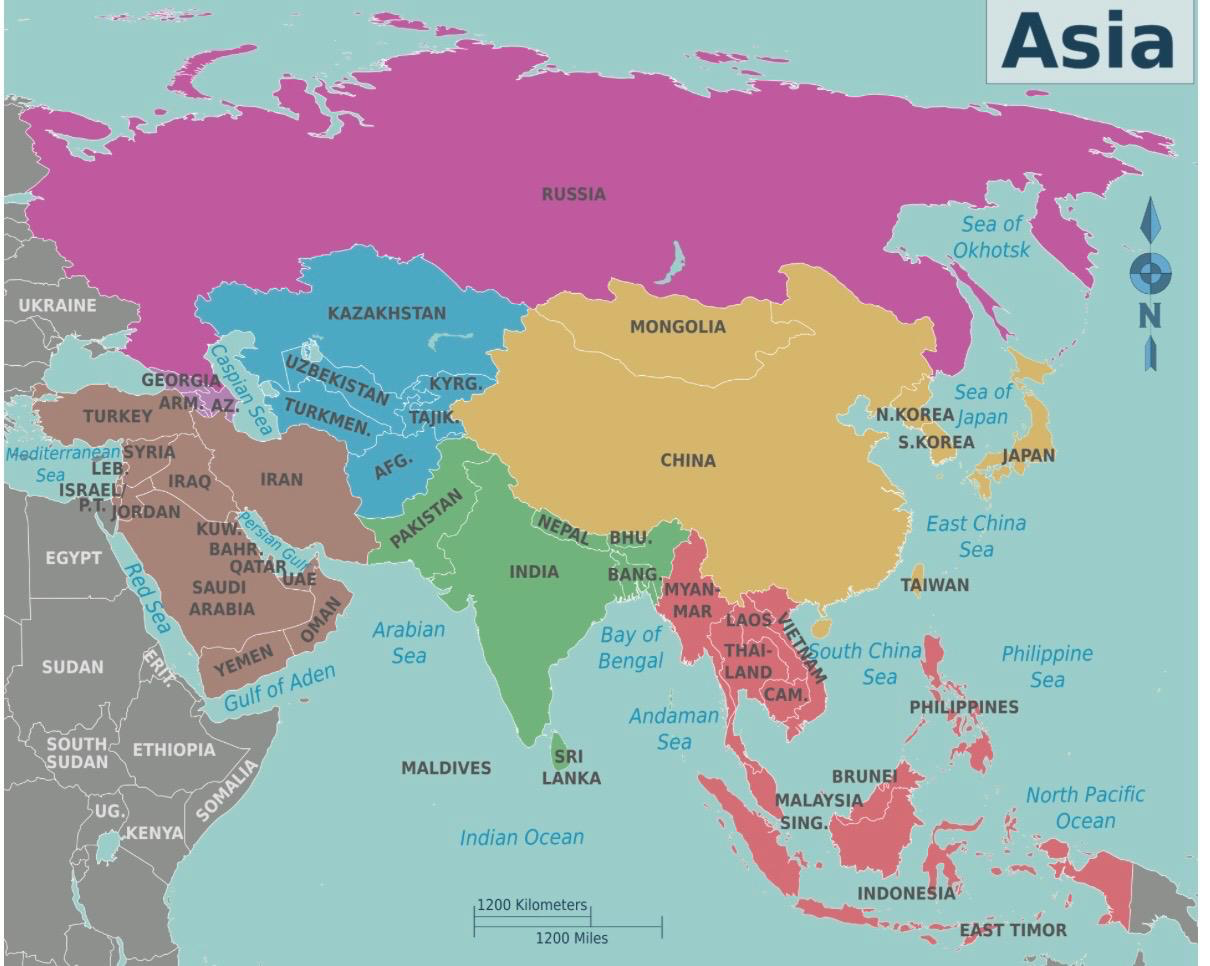
Afghanistan’s geopolitics is shaped by the interaction of its geographical position, domestic vulnerabilities, and the structure of regional competition. The country is landlocked and has no direct access to the open seas. Nevertheless, if transit infrastructure is developed and transport routes are secured, Afghanistan could serve as a connecting hub between the markets of Central Asia, South Asia, China, and the Middle East. This position offers the potential to transform Afghanistan’s landlocked geography into a strategic asset. Realizing that potential, however, depends on security, investment, institutional capacity, and sustainable agreements among states.
From a regional security perspective, threats are not confined within national borders. Armed groups, drug trafficking, forced migration, and economic crises can spill over into neighboring countries through geographical proximity and transnational networks. Nevertheless, the existence of shared threats does not necessarily lead to political convergence, because states assess risks according to their own historical experiences, national capabilities, and differing priorities. These divergent perceptions of security are among the principal factors complicating regional policy toward Afghanistan.
2. Russia: Security Balancing and the Preservation of Strategic Depth
Russia’s policy toward Afghanistan can be examined through the lens of strategic realism and its efforts to manage threats in the vicinity of Central Asia. Moscow is particularly concerned about the spread of instability, the activities of extremist groups, drug trafficking, and the weakening of regional security arrangements. The Islamic State Khorasan Province (ISKP), whose attacks have affected Afghanistan and the wider region, is a concrete example of the transnational threat shaping these calculations (Center for Strategic and International Studies, 2023). From this perspective, diplomatic engagement with Afghanistan’s de facto authorities can serve as a means of maintaining communication channels, assessing threats, and preventing security vacuums from emerging.
A major change occurred on 3 July 2025, when Russia became the first country to formally recognize the Taliban-led government. The decision followed Russia’s removal of the Taliban from its list of prohibited terrorist organizations in April 2025. Moscow presented recognition as a basis for expanding bilateral cooperation, including in security, counterterrorism, trade, energy, transport, agriculture, and infrastructure (Reuters, 2025). This move reflects a pragmatic calculation: Russia sees engagement with the authorities in Kabul as one possible instrument for addressing threats and maintaining influence in the region.
Recognition, however, should not be interpreted as proof that security concerns have been resolved or that the Taliban government has acquired broad international legitimacy. The threat posed by ISKP remains, while questions about the presence and activities of other armed groups continue to complicate regional security. Russia’s approach also has to account for the concerns of Central Asian states, whose threat perceptions and preferred responses are not identical. Formal recognition therefore represents a significant diplomatic shift, but not a guarantee that Moscow can control developments inside Afghanistan.
The limits of external influence over Afghanistan’s political structure, differences among Central Asian states, and the complex nature of non-state threats constrain Russia’s ability to control outcomes. Russia’s policy is therefore better understood as a strategy for managing risks and maintaining regional influence than as a comprehensive plan for reconstructing Afghanistan’s political order.
3. China: Geoeconomics, Regional Connectivity, and Security Caution
China’s approach to Afghanistan is shaped by the intersection of peripheral security, economic development, and regional connectivity. Afghanistan’s importance to Beijing is not limited to investment opportunities or potential access to natural resources; preventing Afghan territory from being used in ways that threaten China’s security is also a central concern.
During official meetings in 2025, Chinese and Afghan officials discussed expanding cooperation in trade, agriculture, energy, mining, poverty reduction, and security (Ministry of Foreign Affairs of the People’s Republic of China, 2025a). This agenda demonstrates that economic diplomacy can serve both as a means of supporting Afghanistan’s development and as an instrument for reducing China’s strategic uncertainty.
However, economic potential is not the same as sustained investment. Investors require legal security, predictable policies, reliable infrastructure, and effective dispute-resolution mechanisms—conditions that political agreements alone cannot guarantee.
China’s geoeconomic strategy should therefore not be viewed as a linear project of expanding influence. Rather, it is a process conditioned by cost-benefit calculations, risk management, and the possibility of turning physical connectivity into mutually beneficial interdependence. If economic benefits are distributed unevenly or projects fail to address the actual needs of Afghan society, regional connectivity may create new forms of economic dependency and vulnerability instead of strengthening stability.
4. Iran: Border Security, Social Ties, and Economic Interests
Iran’s policy toward Afghanistan is influenced by a combination of security, economic, social, and geopolitical factors. The security of its eastern borders, migration management, drug trafficking, bilateral trade, shared water resources, and the circumstances of communities with cultural and linguistic ties to Iran are among the issues shaping Tehran’s calculations.
The January 2025 visit to Kabul by Iranian Foreign Minister Abbas Araghchi provides a concrete example of this multifaceted agenda. According to Afghanistan’s Ministry of Foreign Affairs, discussions covered bilateral relations, economic cooperation, Afghan refugees in Iran, border management, and water management (Ministry of Foreign Affairs of Afghanistan, 2025). The visit showed that Tehran and the Taliban authorities maintain channels for practical diplomacy even though engagement does not resolve their disagreements or amount to a settlement of all bilateral issues.
Water is a particularly sensitive connection between environmental security and regional diplomacy. The 1973 Helmand River Treaty provides a framework for water allocation, but implementation and interpretation have remained contentious, especially during periods of drought and water scarcity. The United Nations Environment Programme has documented how drought, water-management problems, and the condition of the Sistan wetlands have contributed to tensions in the shared basin (UNEP, 2003). This example shows why water diplomacy requires reliable hydrological data, joint monitoring, technical negotiations, and procedures for resolving disputes rather than public accusations alone.
Migration is another concrete source of both interdependence and tension. In June 2025, the United Nations High Commissioner for Refugees reported a sharp increase in Afghans returning from Iran under adverse circumstances and warned that large-scale returns could further destabilize Afghanistan’s fragile humanitarian situation (UNHCR, 2025). This illustrates the limits of treating migration solely as a border-control issue: returns at a scale that overwhelms housing, livelihoods, health services, and local infrastructure can create additional economic and security pressures on Afghanistan and its neighbors.
For Iran, a stable Afghanistan could be beneficial in terms of trade, border management, and reducing security risks. Nevertheless, stability achieved at the expense of Afghanistan’s social, economic, and legal needs may remain fragile over the long term. Sustainable diplomacy must therefore address security concerns while also promoting economic cooperation, shared-resource management, humane and orderly migration arrangements, and regular mechanisms for resolving disputes.
5. Converging Interests or Hidden Competition?
Despite differences in their priorities, Russia, China, and Iran share interests in several areas, including preventing the spread of instability, countering transnational armed groups, curbing drug trafficking, and maintaining economic corridors. The joint statement issued following the quadrilateral meeting of the foreign ministers of China, Iran, Pakistan, and Russia in September 2025 emphasized economic cooperation, humanitarian assistance, counterterrorism, and diplomatic efforts concerning Afghanistan (Ministry of Foreign Affairs of the People’s Republic of China, 2025b).
This document demonstrates the existence of a shared agenda. However, diplomatic statements should not be equated with effective policy implementation. The participating states may differ in how they define threatening groups, prioritize risks, approach Afghanistan’s de facto authorities, and distribute the costs of regional security.
This situation can be explained through the concept of “competitive cooperation”: actors cooperate in certain areas while simultaneously seeking to preserve their influence and prevent others from gaining a strategic advantage.
Consequently, tactical convergence does not necessarily lead to strategic alignment. The sustainability of cooperation depends on transparent commitments, verifiable actions, continuous diplomatic channels, and tangible shared interests. If regional mechanisms remain limited to political meetings and declarations, their capacity to reduce tensions over the long term will remain constrained.
6. The Security Dilemma and the Limits of Externally Driven Peacebuilding
One of the principal obstacles to regional peace is the security dilemma—a situation in which measures taken by one state to increase its own security may be perceived by others as threatening, prompting countermeasures. For example, an actor’s expansion of security cooperation with Afghanistan’s de facto authorities may be interpreted by another actor as an attempt to extend its influence. Under such circumstances, even policies intended to be defensive can intensify competition and undermine trust.
Moreover, excessive emphasis on hard security—including border controls, intelligence-sharing, and military responses to threats—may marginalize the structural dimensions of instability. Lasting peace depends on more than containing armed threats. The quality of governance, access to livelihoods, fundamental rights, mechanisms for resolving disputes, and the extent of political participation also influence the durability of social order.
If regional cooperation is confined to coordination among governments to control security threats, it may strengthen short-term security without consolidating the political and social foundations of peace. Peacebuilding must therefore address two levels simultaneously: interstate security and the sustainability of Afghanistan’s domestic political and social order.
7. Afghanistan and the Question of Strategic Autonomy
Afghanistan should not be viewed merely as an object of competition among foreign powers. The concept of strategic autonomy refers to a country’s ability to preserve independent decision-making capacity, diversify its external relations, and avoid asymmetric dependence. For Afghanistan, this means maintaining balanced economic and diplomatic relations, avoiding excessive reliance on a single partner, and strengthening institutions capable of translating external agreements into public benefits.
Strategic autonomy, however, cannot be achieved simply by declaring an independent foreign policy. It requires institutional coherence, stable economic rules, transparent resource management, and effective negotiating capacity. In the absence of these capabilities, economic or security dependence can restrict the country’s bargaining power.
At the same time, emphasizing independence should not be interpreted as advocating economic isolation. Afghanistan needs regional connectivity, investment, trade, and technical cooperation. The central issue is ensuring that these relationships are governed by clear rules, mutual benefits, and the preservation of Afghanistan’s decision-making authority. Within such a framework, competition among partners could expand Afghanistan’s economic options, provided that it does not create new dependencies or turn the country into an arena for settling disputes among external powers.
8. A Proposed Framework for Regional Cooperation
Turning overlapping interests into effective cooperation requires a multilayered framework. First, regular mechanisms for exchanging information about transnational threats should be accompanied by clear and verifiable standards, ensuring that security cooperation does not remain limited to opaque claims.
Second, economic cooperation should be based on commercially viable projects, contractual transparency, risk assessment, and a defensible distribution of benefits. Infrastructure projects that lack sufficient economic demand or institutional safeguards may become underutilized assets.
Third, the management of water resources, migration, and trafficking should be pursued through technical dialogue and enforceable agreements rather than episodic political responses. Fourth, regional mechanisms should be coordinated with United Nations efforts to alleviate human suffering and support a political solution. Fifth, all peacebuilding initiatives should assess their consequences for the Afghan population, particularly in terms of access to education, livelihoods, public services, and social participation.
This framework could be developed incrementally: beginning with less contentious issues, building trust through measurable results, and then extending cooperation to more complex areas. Such an approach is more realistic than expecting a comprehensive geopolitical consensus to emerge at once.
Conclusion
Afghanistan’s position in the strategic calculations of Russia, China, and Iran cannot be reduced to either straightforward power competition or unconditional cooperation for peace. All three countries have security and economic reasons to engage with Afghanistan, but their interests, risk tolerance, and policy instruments differ.
The overlap of their concerns can facilitate cooperation against transnational threats, promote economic development, and strengthen regional connectivity. Nevertheless, competition for influence, mutual distrust, and divergent understandings of security may prevent this cooperation from developing into a durable regional order.
The central argument of this article is that regional cooperation is an important but insufficient condition for lasting peace in Afghanistan. If regional diplomacy remains confined to threat management and neglects political legitimacy, institutional capacity, citizens’ rights, and human development, it is likely to produce only limited and vulnerable stability. Conversely, if cooperation among regional powers is grounded in transparency, mutual benefit, respect for Afghanistan’s independence, and support for an inclusive political solution, it can create more favorable conditions for reducing tensions and promoting development.
Ultimately, Afghanistan’s future will not be determined solely in regional capitals. It will also depend on the interaction between the strategic calculations of external powers and Afghan society’s capacity to shape a stable, accountable, and socially accepted order.